LAST CHANCE “SALOON” FOR LABOUR PARTY
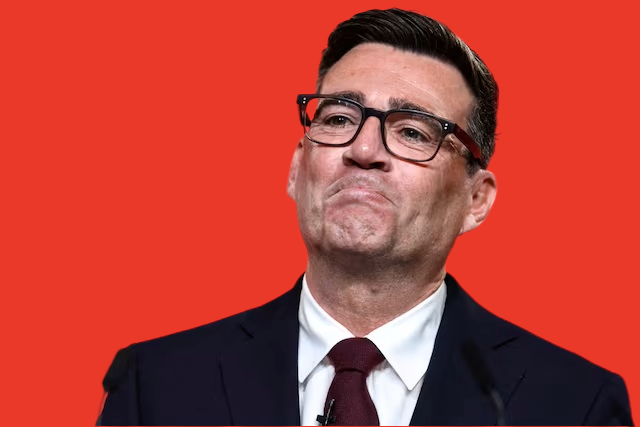
New Labour Party leader promises big change despite that till now he offered few clues only on how he will deliver it, but I am not bothered as I know he will.
After 14 years of austerity under the conservative party, I was looking forward to big changes in our life when Sir Keir Starmer became the new PM. As soon as Keir Starmer announced his cabinet, I said to myself “this is not good”. And I was right. His team was a team of lawyers who had no experiences and clue in trade, even less with how to build something.
It was inevitable that after the labour party was getting slapped after the local elections it was just about the time “when - not if” there will be the 7th change of PM in a decade.
I was listening to Andy Burnham speech where set his ambitions far higher than the conventional measure of political success. He argued that Britain took a wrong turn in the 1980s. "Four decades of neoliberalism" had followed, he said, damaging traditional working-class communities in cities and towns as well as rural and coastal areas. This is what he promised to reverse.
Doing so, he said, would amount to no less than "the most significant change moment in our politics for 40 years". It will not have been lost on any Labour MPs listening that in making this argument Burnham is not only criticising Thatcherism, but also the accommodation with elements of it which he clearly believes the New Labour governments he served represented.
In any case, it bears repeating that a pledge to represent the biggest change of direction in British politics for four decades is quite some test to set your own premiership three days before it has begun.
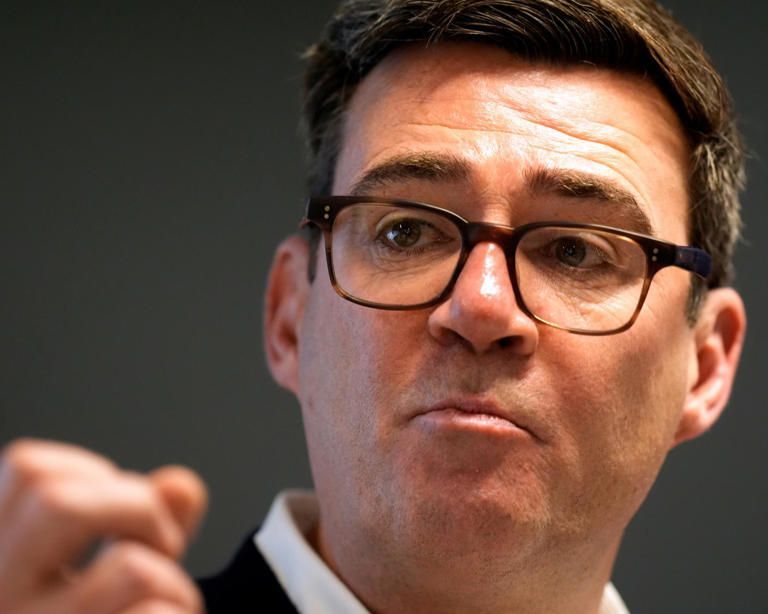
So, who is Andy Burnham?
His political brand is all about being matey and approachable, and the "vote Andy" slogan has brought him a lot of success at the ballot box over the years.
He will also be the first self-proclaimed Northerner to be prime minister since Harold Wilson in the 1960s and 70s. PMs since then may have had northern English roots, but none have made it a core part of their appeal in the way that Burnham has.
He even has the nickname King of North, earned after he made a defiant, open-air speech in 2020 telling the government Greater Manchester would not accept any more Covid restrictions.
But the 56-year-old began his long political career as the archetypal Westminster insider - and although he has only been an MP for less than a month this time, his rise to power has been decades in the making.
He first stood to be Labour leader in 2010 and then again in 2015, when he came a distant second to Jeremy Corbyn.
He might have gone down as a footnote in political history if he had not taken the gamble, in 2017, to seek election as the first mayor of the Greater Manchester region.
Regional mayors were an untested concept at the time but Burnham made the role his own - and used it to build a powerful platform, untainted by the London-centric Westminster politics he professes to despise.
Born in Liverpool in 1970, Burnham grew up in Culcheth, a quiet commuter belt village in Cheshire, near Warrington. His father, a BT engineer, and his mother, a GP receptionist, were both staunch Labour supporters and he developed an early interest in politics.
Burnham has described how he was inspired to join the Labour Party at the age of 14, after being moved by the BBC TV drama, Boys from the Blackstuff, about life on the dole in Liverpool.
A lifelong Everton fan, his friends remember Burnham as a competitive, sports-mad child, who was a fast bowler for Lancashire schoolboys cricket team.
At school, the local Roman Catholic comprehensive, his English teacher recalls how he stood to be a Labour candidate in mock elections - and won by a landslide.
Burnham and his two brothers were the first in their family to go to university, with Andy studying English at Cambridge.
In his book, Head North, Burnham wrote that he "struggled to feel part of things" at university and felt like an "imposter".
However, the music-lover - who is a fan of Manchester indie bands like The Smiths and The Stone Roses - said his "growing interest in Manchester music gave me an identity and an advantage".
After graduating, he started out in journalism, working for trade magazines including Tank World and Passenger World Management.
In his early 20s, he got his first break in politics, working as a researcher for the late Tessa Jowell, then MP for Dulwich and West Norwood, who would go on to be a minister under Tony Blair and Gordon Brown. Burnham rose quickly through the ranks, becoming a special adviser to Culture Secretary Chris Smith before being elected as the MP for his hometown of Leigh, in Greater Manchester, in 2001. He first served as a junior minister under Blair but joined the cabinet as chief secretary to the Treasury, and later culture secretary and health secretary, under Brown. It was as secretary of state for culture, media and sport that Burnham was heckled at a memorial service marking the 20th anniversary of the Hillsborough disaster. Ninety-seven Liverpool fans were killed in the stadium crush of 1989. The heckling spurred Burnham on to raise the issue in cabinet, contributing to the launch of a second inquiry into the disaster.
In 2010, after Brown resigned following Labour's general election defeat, Burnham ran to become the party's leader. He came fourth out of the five contenders, losing to Ed Miliband, but spent the next five years building up his appeal with the party's grassroots.
In 2015 he tried again, beaten this time by Jeremy Corbyn.
Burnham's critics have branded him a weathervane, whose views have blown with the political winds to give him the best chance of success. He served in Corbyn's shadow cabinet, as shadow home secretary, despite being seen as on the Blairite centre-right of the party.
Burnham's views have moved increasingly to the left, backing the nationalisation of water and energy. He was not one of those who resigned in protest at Corbyn's leadership in 2016. Instead, he stood down in 2017 to run to be the first mayor of Greater Manchester.
Burnham won the contest with more than 60% of the vote and was re-elected by an even bigger margin in 2021. As mayor, he has drawn praise for his transformation of the region's transport system. Under his leadership, Greater Manchester was the first area in England outside London to bring bus services back under public control, while integrating them with other modes of transport under the branding of the "Bee Network". Other bold pledges included ending rough sleeping in the region by 2020 - although the target was missed.
His profile rose further during the Covid pandemic, when he accused the Conservative government of treating the north of England with "contempt" over regional lockdown restrictions.
The stand-off helped earn him the nickname "King of the North".
By the autumn party conference season of 2025, Burnham was openly on manoeuvres for the top job, as he refused to rule out a leadership bid. His interventions appeared to backfire, after he provoked a backlash by suggesting the government was "in hock" to the bond markets - a reference to the government's self-imposed rules limiting spending and borrowing.
In January 2026 a potential opportunity for a return to Westminster arose when Greater Manchester MP Andrew Gwynne announced he was standing down, triggering a by-election in his Gorton and Denton constituency. However, Burnham was blocked from standing by Labour's ruling body, with the approval of the prime minister. By May, the situation had changed. Labour suffered a poor set of election results in England, Scotland and Wales, with Reform riding high in the polls and the party seeing success in Burnham's backyard.
Sir Keir Starmer faced increased pressure over his future, with some MPs calling for change and ministerial resignations taking place. Josh Simons announced he would step down as Labour MP for Makerfield to make way for Burnham to mount a bid to return to Parliament.
Burnham went on to be selected as the Labour candidate for the constituency and the following month he secured his return to Westminster.
On 17 July 2026 Andy Burnham Andy Burnham was officially declared leader of Britain’s governing Labour Party, promising to bring hope to the British people and purpose to the floundering government as he cleared his final hurdle to take office as prime minister on Monday 20 July 2026.
The former mayor of Greater Manchester was the only contender in the center-left party’s leadership contest to replace departing Prime Minister Keir Starmer, who was forced out by a rebellion within his party. Friday’s announcement was a foregone conclusion after Burnham secured nominations from 379 of the 403 Labour lawmakers in the House of Commons.
Make no mistake, Burnham pledged to serve “people and places who have been waiting too long for politics to let them hope again.” Do I believe him? Yes, I do!